Sell Shaker Cabinet Doors Online
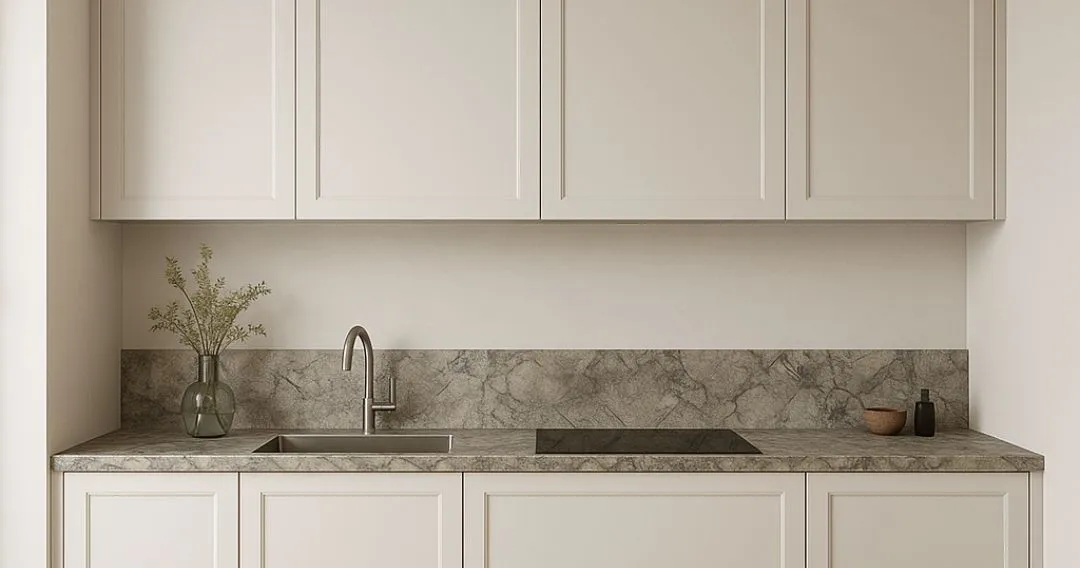
Ask a homeowner to describe their dream kitchen and there is a good chance they will describe a Shaker door without knowing the name for it. Flat recessed panel, square frame, no ornament, painted in something between white and sage. It has been the best selling cabinet door style in the UK, US and Northern Europe for the better part of two decades, and it shows no sign of being replaced.
For a cabinet front business, that popularity is both the opportunity and the trap. Everyone wants Shaker, so everyone sells Shaker, and the customer comparing your quote against three others is comparing on price, lead time and how easy you made it to buy. Here is what it takes to sell Shaker doors online properly.
1. Why Shaker Keeps Outselling Everything Else
The style comes from Shaker furniture of the 18th and 19th centuries, where ornament was considered a distraction and construction was left honest and visible. What survived into modern kitchens is a five piece door: two stiles, two rails, and a flat panel sitting recessed in the middle.
Its commercial advantage is that it refuses to date. A Shaker door in warm white reads as traditional next to a farmhouse sink and reads as contemporary in matte black with an integrated handle. Customers renovating a kitchen they intend to keep for fifteen years pick the option least likely to look like a specific year, and that is Shaker almost every time.
Why demand stays high:
- It reads as both traditional and modern depending on colour and hardware
- It survives resale, so buyers see it as the safe choice
- It suits replacement door projects, where the new fronts must sit alongside an existing room
2. Shaker Is Not One Product, It Is a Family
The word covers a range of doors that differ enough to matter in production and in price. Selling online means deciding which variants you offer and naming them clearly, because a customer who orders the wrong one will blame your website.
The variants worth knowing:
- Classic Shaker. Rails and stiles around 57 to 64 mm, flat recessed panel, square inside edge.
- Slim or narrow Shaker. Rails cut back to roughly 35 to 45 mm. Reads more contemporary and suits smaller doors, but leaves less room for hinge boring.
- Beaded Shaker. A small bead run on the inside edge of the frame. Traditional, and slower to make.
- Applied moulding Shaker. A frame moulding applied to a flat panel rather than a true five piece door. Cheaper to produce, more prone to visible joints under paint.
- One piece routed Shaker. A single MDF blank with the Shaker profile machined into it. No joints at all, perfect for paint, and often the only option on narrow drawer fronts.
3. Material Decides Your Product Line
Material choice is not a detail you leave to the customer without guidance. It determines your finishing process, your minimum sizes, your lead time and your warranty exposure.
Painted MDF is the workhorse of the category. It is dimensionally stable, takes paint evenly, and does not telegraph joints as the seasons change. Solid hardwood, usually oak, maple, ash or birch, is what customers ask for when they want a stained or oiled finish where the grain is the point. Veneered MDF sits in between: a stable core with a real wood face, which is how most oak Shaker doors are actually built at scale.
The one thing to be honest about on your website: a painted solid wood five piece door can develop a hairline crack at the rail and stile joint as the timber moves with humidity. It is normal, it is not a defect, and it is far cheaper to explain in a product page paragraph than in a complaint email eight months after delivery.
In short:
- Painted MDF for colour work and the cleanest paint finish
- Solid hardwood for stained, oiled and grain led doors
- Veneered MDF for wood look at scale with better stability
- Publish your movement and finish caveats before the order, not after
4. The Sizing Rules That Break Shaker Orders
Shaker has a hard geometric constraint that slab doors do not. A five piece door needs two stiles plus a visible panel across its width. With 57 mm rails, a 130 mm drawer front leaves almost nothing in the middle, and it looks wrong. Below roughly 200 mm you are into narrow frame territory, and below 150 mm most workshops switch to a one piece routed front so the proportions hold.
If you sell replacement fronts for standard cabinet systems, this is where the money is lost or made. IKEA METOD, Howdens, Wren, Nobilia and the rest all have narrow drawer and filler sizes in their ranges. Your online product has to know, automatically, that a given size cannot be produced as a true five piece door and must switch construction or be rejected before the customer pays.
What your system needs to enforce:
- A minimum width and height for five piece construction
- An automatic fallback to one piece or slab on narrow fronts
- Correct hinge boring positions per cabinet system, not per guess
- Panel and rail proportions that stay visually consistent across a whole kitchen
5. Why Shaker Is Painful to Quote by Hand
Count the variables on a single Shaker order. Construction type. Material. Rail width. Inside edge. Panel type, which may be flat, beaded, fluted or glazed. Finish, which may be a standard colour or any RAL or NCS reference. Sheen level. Hinge boring. Handle drilling or an integrated pull. Cabinet system. Then multiply that by thirty fronts in eleven different sizes, which is what an average kitchen actually is.
That is why manual Shaker quoting takes twenty to thirty minutes per enquiry and why the second revision takes almost as long as the first. The customer changes the colour, adds two drawer fronts, and someone rebuilds the spreadsheet. Meanwhile they are waiting, and three competitors are also quoting.
The cost of doing it by hand:
- Days of delay on a decision the customer wants to make this week
- Pricing that drifts between quotes and between staff members
- Errors in a size or a boring pattern that reach production and eat the margin
- A ceiling on volume that has nothing to do with your workshop capacity
6. Turn the Variables into a Configurator
Everything listed above is a rule, and rules are exactly what software is good at. Set your Shaker product up once: the constructions you offer, the rail widths, the panel options, the finishes, the price per square metre by material, the surcharges for custom colours and glazing, the minimum sizes, the cabinet systems you support. From then on the customer configures the door and sees a correct price as they build it.
What changes when you do:
- The customer gets a price in seconds instead of days, at any hour
- Every quote follows the same pricing rules, so margin stops leaking
- Specifications arrive structured and production ready, entered by the customer
- Deposits are taken the moment the quote is accepted, not a week later
- Your team spends its time on finishing and service instead of arithmetic
Start Selling Shaker Doors Online with Fronts Form
Shaker will keep selling. The question is whether a customer who wants one can buy it from you in five minutes on a Sunday evening, or has to email and wait until Tuesday.
Fronts Form is quoting software built for cabinet door businesses. Set up your Shaker range, your materials and your pricing rules once, then embed a configurator on your site that prices any door instantly and turns the quote into a paid order. Cabinet sizing for IKEA, Howdens, Wren, Nobilia and other major systems comes preloaded, so replacement doors fit first time.